Quick answer
Talabat marketing for restaurants works best when your menu is clean, your offers are tightly controlled, and your costs are clear before you spend. In the UAE, Talabat commission is roughly 15% to 30% of order value, with many independent restaurants around 20% to 25%, so every promo needs a margin check.
- Talabat launched 100 rent-free cloud kitchen spaces for eligible UAE-founded brands.
- Most independent restaurants in the UAE sit around 20% to 25% commission, based on Quickbuy’s review.
- Discounts and buy one get one campaigns are typically funded by the restaurant.
- Restaurant setup should include menu editing, delivery zone control, and careful promo testing.
If you are already taking delivery orders in Dubai, the question is not whether Talabat can bring more volume. It is whether the extra orders still leave enough margin after commission, packaging, payment fees, and any discount you fund. That is where talabat marketing for restaurants becomes a commercial decision, not just a visibility exercise.
The platform can support discovery and order growth, but it works best when the listing is easy to understand, the menu is built for delivery, and the offer structure is disciplined. If your restaurant needs stronger positioning, content, and menu presentation across delivery and owned channels, F&B marketing in Dubai is often the next layer to fix.
For Dubai operators, the practical job is simple to say and harder to execute: make the menu sell, make the offers profitable, and measure whether orders are worth the cost. Talabat can be part of that plan, but it should not be treated like a blank cheque for discounting.
How Talabat Marketing for Restaurants Works
Talabat is a delivery sales channel, but the marketing part goes beyond a simple listing. Restaurants can use the platform for visibility, promotional offers, and paid placements. The real question is not whether those tools exist. It is how they affect net profit once the order is paid for, packed, and delivered.
Start with the menu, not the spend
A restaurant that pushes traffic into a weak menu usually pays for mistakes faster than it pays for growth. The menu has to do three jobs quickly: show what the kitchen is good at, make the offer easy to choose, and keep the order process simple. That means clear item names, a focused structure, and food that travels well. If a dish looks good in the dining room but collapses in a delivery bag, it is not a strong delivery item.
Use promotions with a defined purpose
Promotions on Talabat work when they are linked to a clear aim. You might want to push a hero item, fill a quieter time window, or test whether a bundle lifts basket value. The research notes for this article state that discounts and buy one get one campaigns are typically funded by the restaurant, not the platform. That makes each offer a margin decision, not a brand vanity play.
Sponsored visibility should support a narrow target
Paid visibility is most useful when it is aimed at a specific outcome rather than the whole menu. A launch offer, a best-seller, or a high-conversion bundle is easier to manage than a broad discount on everything. If the paid traffic lands on a cluttered page, the spend has to work harder than it should.
Talabat also sits inside a broader restaurant growth plan. Social content can create the appetite before the customer opens the app, while the platform closes the order. If you need help with that wider content side, Red Dot Marketing also provides social media management in Dubai for food and drink brands that need stronger demand before the app visit.
How to Set Up a Talabat Restaurant Partnership Properly
Most delivery problems start at setup. The restaurant joins the platform, then rushes to promote before the menu, zones, packaging, and operating rhythm are ready. That is usually when costs rise faster than sales. A cleaner setup makes the later marketing work much easier.
1. Build the delivery menu first
Do not upload the whole dine-in menu and hope for the best. Start with the dishes that sell consistently and travel well. Delivery menus work better when they are shorter, easier to scan, and built around what the kitchen can produce reliably under pressure. Keep the strongest sellers visible and remove items that only add operational noise.
2. Treat delivery zones as an operational decision
Zones should reflect what the kitchen can handle, not what looks attractive on a map. If the service area is too wide, the restaurant risks late arrivals and damaged food quality. If it is too narrow, you may miss nearby demand. The right shape depends on the location, the category, and the speed of the kitchen, so the zone should be reviewed against real fulfilment conditions rather than assumed demand.
3. Use the platform’s performance view carefully
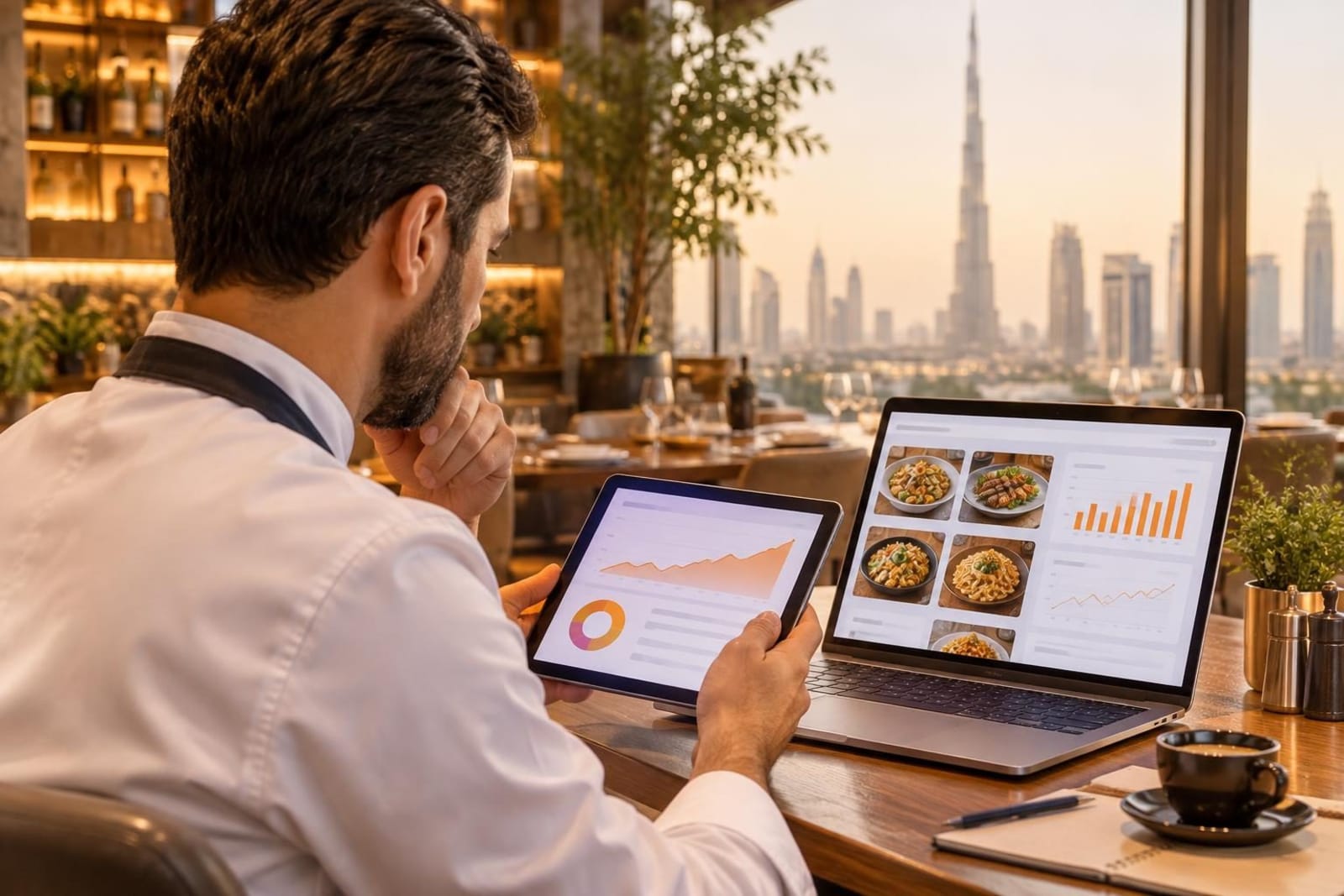
The useful habit is to watch which items move, which promos are actually used, and whether the order mix still makes sense after discounts. You do not need to guess what people are buying when the order data is already there. Use it to trim weak items, adjust bundles, and keep the menu focused on what works best for delivery.
4. Make delivery packaging part of the offer
Packaging is not a side cost. It affects how the food arrives, how it is perceived, and whether the customer orders again. A product that looks profitable on paper can become poor value once packaging, payment processing, and wastage are added. The restaurant should price the delivery version of the menu with those costs in mind, not the dine-in version alone.
Talabat also supports delivery expansion for eligible brands through its cloud kitchen initiative. In March 2026, Talabat announced 100 rent-free cloud kitchen spaces for eligible UAE-founded restaurant brands on its corporate news page. For operators looking to test a delivery-only concept without taking on a second full location immediately, that is a useful route to watch. The announcement is on Talabat’s corporate news page.
Costs, Commission, and What ROI Should Look Like
Anyone searching for talabat marketing for restaurants uae is usually trying to answer one thing: what will this really cost me? The honest answer is that commission is only part of the bill. You also need to factor in promotions, payment costs, packaging, and any paid placements you buy inside the platform.
Quickbuy’s Talabat Commission for Restaurants (2026) places UAE commission at roughly 15% to 30% of order value, with many independent restaurants falling between 20% and 25%. That is the commercial baseline. A AED 100 order can quickly become a much smaller net amount once commission and other costs are taken off the top.
| Factor | What the research notes show | What it means for the restaurant |
|---|---|---|
| Commission | About 15% to 30% | Build pricing around the net order, not the headline sale |
| Independent restaurant range | About 20% to 25% | Negotiation may matter if volume, category, or terms give you room |
| Promotions | Usually funded by the restaurant | Only discount items that still work after commission and packaging |
| Cloud kitchen option | 100 rent-free spaces announced for eligible UAE-founded brands | Useful for testing a delivery-only concept without a full location build-out |
Source: Red Dot Marketing Research, compiled from the sources listed at the end of this article. Figures are indicative and vary by brand and campaign.
How to judge whether the account is healthy
Do not judge performance by order count alone. A campaign can bring more orders and still weaken the business if the average basket drops too far or if the discount is too deep. The better checks are straightforward: whether the basket value holds, whether the same customers return, and whether the gross margin after commission still makes sense for the category.
Where restaurants usually lose money
The most common problem is treating every promo as a growth win. If the discount is broad, the items are low margin, and packaging cost is ignored, the account can look busy while the actual return falls. Another common issue is buying visibility before the menu has been tightened enough to turn that traffic into stable demand.
Quickbuy’s commission range is useful because it puts a real ceiling on what your offers can tolerate. Funa Digital’s guidance on Talabat and Deliveroo marketing for Dubai restaurants makes a similar point about comparing platform performance on actual order quality, not only on volume. In Dubai, that matters more than a generic marketing rule ever will.
Dubai Best Practices That Improve Talabat Performance
Dubai delivery demand is shaped by location, meal occasion, and category. A strategy that works for an office district at lunch may not work in a residential area later in the evening. The restaurant does not need a different brand for each area, but it does need different offer discipline.
Match the offer to the order occasion
Lunch, dinner, and late evening do not pull the same kind of order. A fast lunch bundle needs a different structure from a family dinner set. If your category competes on speed, the menu should feel quick to choose. If it competes on comfort or sharing, the offer should make the basket feel worth the spend.
Keep special periods simple
Seasonal shifts can change what people order and when they order it, so the menu should not become more complicated when demand gets stronger. During busy periods, simpler bundles and clearer portions are usually easier to execute than long, custom-heavy offers. The operational side matters too. When prep gets slower, customer satisfaction drops quickly.
Respect category competition
A burger brand, a healthy bowl concept, and a dessert-led kitchen are not selling in the same way even if they are all on the same platform. Price sensitivity, visual appeal, and add-on potential change by category. That means the page structure, promo structure, and hero products should be chosen for the category rather than copied from another restaurant.
Use outside-the-app support when it helps the order
Talabat can convert demand, but it does not create it on its own. Short-form content, brand photography, and menu storytelling can make the customer more likely to recognise and choose your restaurant when they see it in the app. The right next step is usually to connect the delivery menu with stronger brand content, not to force more traffic into an unclear offer.
⚠️ Common Mistakes to Avoid
- Discounting too widely: Broad offers can pull low-value orders. Keep discounts tied to the items and time windows that still make sense after commission.
- Uploading the full dine-in menu: Delivery menus should be tighter. Too much choice makes the strongest items harder to spot.
- Ignoring packaging cost: A menu that looks profitable in the kitchen can become weak once packaging and payment costs are added.
- Running promos without review: Test one offer, then check whether basket value and repeat orders justify it before expanding.
How Talabat Differs from Other Food Delivery Platforms
Restaurants often ask whether talabat marketing for restaurants should be treated the same way as Deliveroo, Careem, or noon Food. The answer is no, even if the core idea is similar. Each platform has its own audience behaviour, listing structure, and commercial terms, so the same campaign can produce different results.
Funa Digital’s article on Talabat and Deliveroo marketing for Dubai restaurants is useful because it treats the platform as a separate channel, not just another extension of social media. That is the right mindset. Your platform plan should stand on its own numbers.
| Factor | Talabat | Other delivery platforms |
|---|---|---|
| Commercial use | Marketplace visibility, promotions, and order conversion | Similar purpose, but audience mix and discovery patterns differ |
| Best use case | Restaurants that want to test paid visibility and promotional offers | Brands that want to diversify demand across several channels |
| Marketing focus | Menu clarity, offers, and placement | Creative and commercial mix varies by platform |
| Cost pressure | Commission and promo spend can compress margin | The same risk exists, but the balance changes by platform |
Source: Red Dot Marketing Research, compiled from the sources listed at the end of this article. Figures are indicative and vary by brand and campaign.
If you sell across several apps, compare the quality of orders, not just the number of orders. One platform may produce better basket value while another is better for first-time buyers. That is a more useful way to decide where to spend next month than trying to copy the same offer everywhere.
Frequently Asked Questions
How to become Talabat delivery partner?
Restaurants normally begin by contacting Talabat through its merchant channels and sharing business details, menu information, and operational setup. The exact onboarding process depends on your category and location. Before joining, it is better to have the menu, packaging, and kitchen flow ready, because the account performs more smoothly when operations are already stable.
How do I advertise a restaurant?
A restaurant can advertise through platform placements, promotions, social content, paid media, and direct customer communication. On Talabat, the main levers are the menu, the offer, and the visibility you buy inside the platform. Outside the app, strong photos and clear brand messaging help customers recognise the restaurant before they search for it.
Where is Talabat Company located?
Talabat operates across the region and has a major presence in the UAE, including Dubai. For the most current office and company location details, use Talabat’s official corporate pages or support channels, since company information can change. Restaurants should rely on official contact routes rather than third-party listings.
How much commission does Talabat take?
Quickbuy’s review puts Talabat’s UAE restaurant commission at roughly 15% to 30% of order value, with many independent restaurants around 20% to 25%. The exact rate can vary by volume, location, delivery method, category, and contract terms. You should always check the real margin after commission, packaging, payment costs, and any discount you fund.
What is the best Talabat marketing strategy for restaurants in Dubai?
The best approach is usually a focused delivery menu, strong visuals, a small number of profitable offers, and careful use of paid visibility. In Dubai, that should be matched to the right zone and the right time of day. If an offer brings orders but weakens margin too much, it needs to be changed before more spend goes in.
Sources & References
- Talabat corporate, rent-free cloud kitchen announcement
- Quickbuy, Talabat Commission for Restaurants (2026)
- Funa Digital, Talabat and Deliveroo Marketing for Dubai Restaurants: How to Win on the Platforms
Plan a stronger Talabat strategy for your restaurant
If you want cleaner menus, better content, and a delivery plan that makes commercial sense, Red Dot Marketing can help shape the next step.
Book a free consultation